30 Hot Stamping Foil Questions Buyers Ask Before Purchasing
A buyer question map for hot stamping foil procurement: 30 questions by intent, concern, source type, page format, conversion value, and reference value.
Browse PINTE hot stamping foil procurement guides, substrate selection, troubleshooting, hot foil vs cold foil comparisons, cosmetic packaging, paper box packaging, and technical resources.
This page is more than a blog list. It is a selection entry point for buyers, sampling teams, press operators, and quality teams. Start with substrate and application, then use the matching guide to confirm parameters, failure causes, sampling method, and RFQ details.
Last updated: 2026-07-23 — Based on PINTE factory sampling, order communication, and production approval experience.
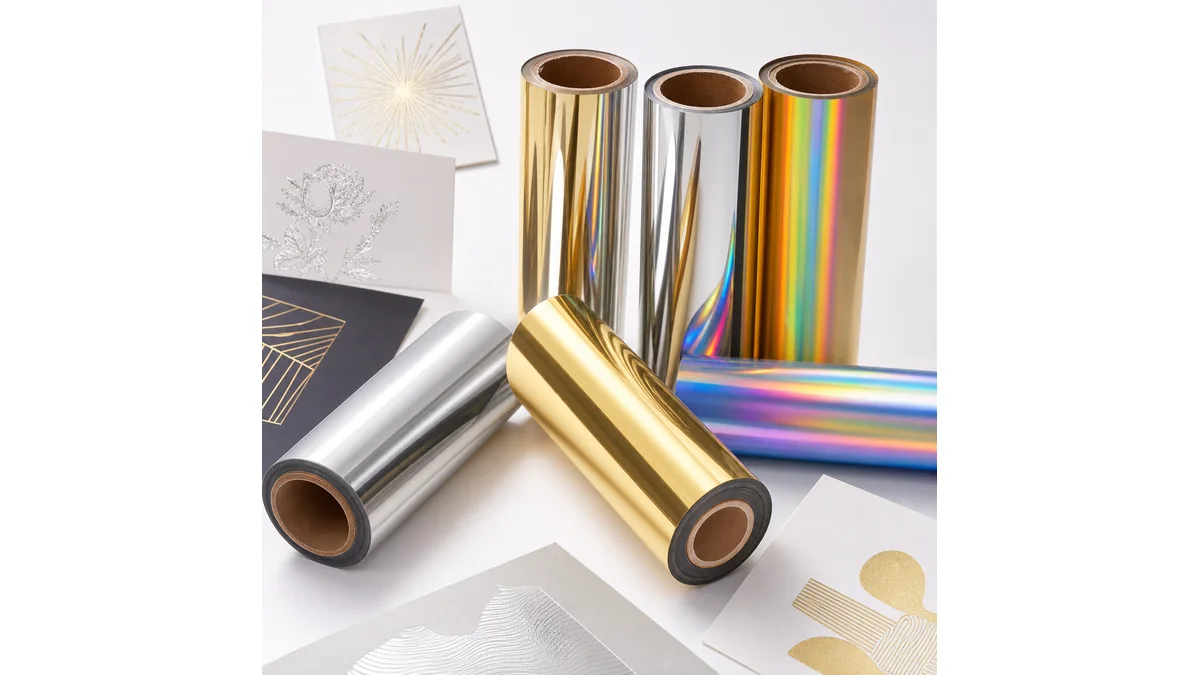
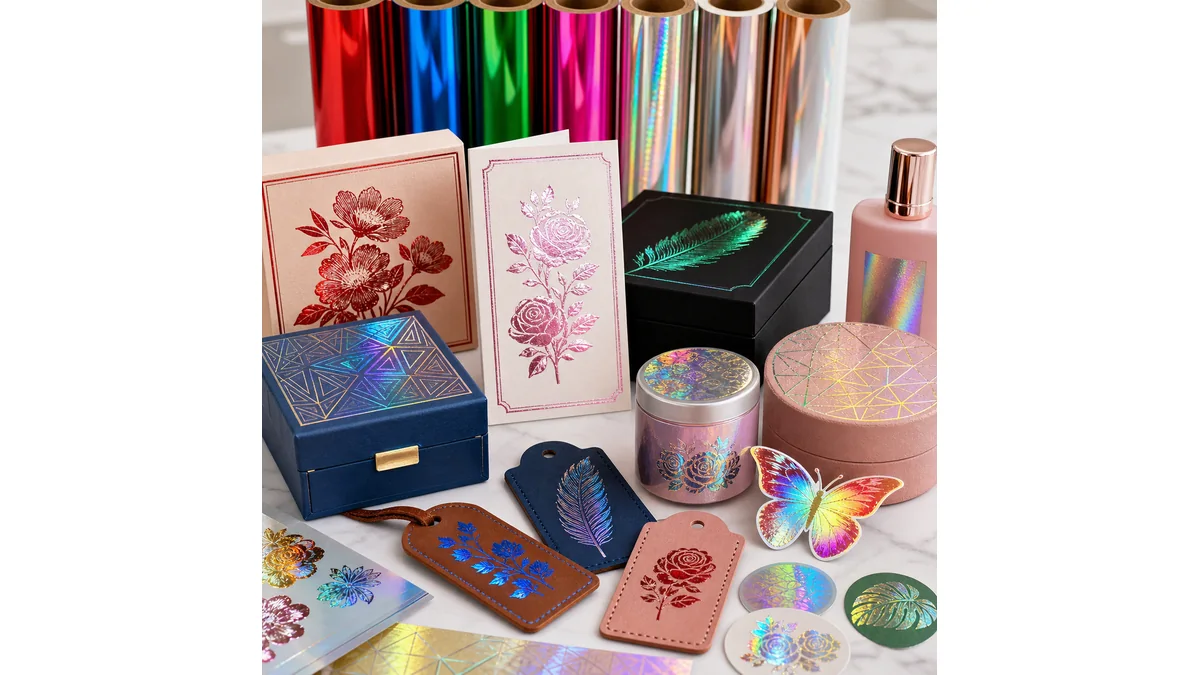
Foil selection depends on substrate, surface treatment, process route, and finished-product testing. Use this table to choose the right guide category before production sampling.
| Application | Common substrates | First checks | Suggested entry |
|---|---|---|---|
| Paper / carton | Coated paper, white card, specialty paper, laminated board | Confirm coating, texture, fine detail, and large solid areas together. | Paper and carton packaging |
| Cosmetic packaging | Cartons, labels, caps, plastic parts | Verify color consistency, alcohol resistance, rub resistance, clean edges, and repeat batches. | Cosmetic packaging |
| Cold foil labels | Film labels, paper labels, UV adhesive layer | Check web tension, adhesive volume, registration, curing, and holographic repeatability. | Label printing |
| Plastic / leather | ABS, PP, PE, PU, natural leather, synthetic leather | Confirm surface energy, contamination, coating, scratch resistance, and rub resistance first. | Plastics / leather |
| Defect | Likely cause | Recommended action |
|---|---|---|
| Missing transfer | Insufficient contact, release mismatch, low surface energy | Hold artwork and speed constant; change only pressure or temperature first. |
| Peeling / poor adhesion | Contamination, coating incompatibility, wrong durability grade | Use tape, rub, alcohol, or fold tests instead of informal hand rubbing. |
| Blurred edges | Excessive temperature/pressure, worn die, overly broad release | Include small text, reverse lines, and logo detail in the sampling area. |
| Color / gloss variation | Batch, substrate color, stamping temperature, or viewing angle | Keep approved samples and roll labels for repeat-order communication. |
For compliance and chemical restrictions, refer to official EU REACH and RoHS pages; each order still needs market, material, and test-specific confirmation. REACH / RoHS
A buyer question map for hot stamping foil procurement: 30 questions by intent, concern, source type, page format, conversion value, and reference value.
Troubleshoot poor adhesion, foil peeling, incomplete transfer, blurry edges, pinholes, dull gloss, and cracking when stamping cosmetic boxes, labels, caps, and plastic parts.
Learn how to choose hot stamping foil for paper boxes, gift boxes, cosmetic packaging, and printed cartons. Compare substrates, foil types, stamping parameters, common problems, and sample testing steps.
A practical B2B buying guide for choosing hot stamping foil by substrate, application, stamping parameters, sample testing, and supplier risk.
Choose hot stamping foil for cosmetic boxes, perfume boxes, makeup packaging, labels, plastic caps, glass bottles, tubes, and alcohol-resistant decorative parts.
Understand hot stamping foil layers: PET carrier, release layer, color layer, metallized layer, and adhesive layer, and how each layer affects adhesion, transfer, gloss, and defects.
A PINTE product introduction page for hot stamping transfer foil, covering hot foil, cold foil, M-PET metallized foil structure, applications, specifications, substrate fit, and sampling checks.
Compare hot foil and cold foil for cosmetic boxes, labels, cartons, plastic parts, metallic effects, machine setup, cost, durability, and order volume.
Compare hot stamping foil fit for coated paper, UV varnish, rough paper, PP, PE, PVC, PET, ABS, laminates, synthetic leather, and cosmetic packaging tests such as RoHS, REACH, rub, scratch, and alcohol resistance.
Practical answers for buyers and production teams comparing hot stamping foil grades, substrate fit, sampling, adhesion, peeling, blurry edges, process parameters, and quote information.
A troubleshooting guide for hot stamping defects, causes, and practical adjustments for packaging and print factories.
Compare hot foil, cold foil, and holographic foil by process, substrate, cost, speed, visual effect, and best packaging use cases.
A procurement checklist for sample testing hot stamping foil before bulk orders: substrate, temperature, pressure, speed, adhesion, durability, width, MOQ, and repeatability.
Covers ABS flatbed or platen hot stamping projects, including as-supplied or uncoated surface, Continuous holographic pattern, sampling tests, supplier RFQ, and production acceptance.
Covers Film label facestock narrow-web cold foil transfer projects, including corona or plasma treatment, poor adhesion or peeling, sampling tests, supplier RFQ, and production acceptance.
Covers ABS flatbed or platen hot stamping projects, including as-supplied or uncoated surface, alcohol or chemical resistance failure, sampling tests, supplier RFQ, and production acceptance.
Covers Film label facestock narrow-web cold foil transfer projects, including corona or plasma treatment, blurred detail, filling, or loss of negative space, sampling tests, supplier RFQ, and production acceptance.
Covers Film label facestock narrow-web cold foil transfer projects, including corona or plasma treatment, Batch consistency and traceability, sampling tests, supplier RFQ, and production acceptance.
Covers Rigid gift-box wrap or board flatbed or platen hot stamping projects, including Anti-scratch coating or film, Batch consistency and traceability, sampling tests, supplier RFQ, and production acceptance.
Covers Coated glass container Roll-on hot stamping for shaped parts projects, including Primer or adhesion-promoting coating, Fine lines and small type, sampling tests, supplier RFQ, and production acceptance.
Covers Film label facestock narrow-web cold foil transfer projects, including corona or plasma treatment, color, gloss, or optical-effect variation, sampling tests, supplier RFQ, and production acceptance.
Covers Folding carton board combined foil stamping and embossing projects, including as-supplied or uncoated surface, Contact or dwell time, sampling tests, supplier RFQ, and production acceptance.
Covers Film label facestock narrow-web cold foil transfer projects, including corona or plasma treatment, blurred detail, filling, or loss of negative space, sampling tests, supplier RFQ, and production acceptance.
Covers Folding carton board combined foil stamping and embossing projects, including as-supplied or uncoated surface, Die material, hardness, relief, level, and wear, sampling tests, supplier RFQ, and production acceptance.
Covers Film label facestock narrow-web cold foil transfer projects, including corona or plasma treatment, foil flaking, dusting, or edge debris, sampling tests, supplier RFQ, and production acceptance.
Covers Film label facestock narrow-web cold foil transfer projects, including corona or plasma treatment, scratch, scuff, or rub failure, sampling tests, supplier RFQ, and production acceptance.
Covers Film label facestock narrow-web cold foil transfer projects, including Primer or adhesion-promoting coating, scratch, scuff, or rub failure, sampling tests, supplier RFQ, and production acceptance.
Covers Film label facestock narrow-web cold foil transfer projects, including corona or plasma treatment, Batch consistency and traceability, sampling tests, supplier RFQ, and production acceptance.
Covers Film label facestock narrow-web cold foil transfer projects, including corona or plasma treatment, Fine lines and small type, sampling tests, supplier RFQ, and production acceptance.
Covers Film label facestock narrow-web cold foil transfer projects, including Printed cold-foil adhesive, Continuous holographic pattern, sampling tests, supplier RFQ, and production acceptance.
Covers Film label facestock projects, including UV varnish or coating, selection stability, sampling tests, supplier RFQ, and production acceptance.
Covers Laminated paper or paperboard flatbed or platen hot stamping projects, including Anti-scratch coating or film, foil flaking, dusting, or edge debris, sampling tests, supplier RFQ, and production acceptance.
Covers Folding carton board flatbed or platen hot stamping projects, including OPP or PET lamination, Continuous holographic pattern, sampling tests, supplier RFQ, and production acceptance.
Covers Folding carton board Sheet-fed offset cold foil transfer projects, including Primer or adhesion-promoting coating, Continuous holographic pattern, sampling tests, supplier RFQ, and production acceptance.
Covers Folding carton board Sheet-fed offset cold foil transfer projects, including Primer or adhesion-promoting coating, Large solid area, sampling tests, supplier RFQ, and production acceptance.
Covers Folding carton board projects, including as-supplied or uncoated surface, selection stability, sampling tests, supplier RFQ, and production acceptance.
Covers Folding carton board projects, including UV varnish or coating, selection stability, sampling tests, supplier RFQ, and production acceptance.
Covers Film label facestock narrow-web cold foil transfer projects, including corona or plasma treatment, incomplete or missing transfer, sampling tests, supplier RFQ, and production acceptance.
Covers Film label facestock narrow-web cold foil transfer projects, including corona or plasma treatment, poor adhesion or peeling, sampling tests, supplier RFQ, and production acceptance.
Covers Film label facestock narrow-web cold foil transfer projects, including corona or plasma treatment, Machine or web speed, sampling tests, supplier RFQ, and production acceptance.
Covers Film label facestock narrow-web cold foil transfer projects, including corona or plasma treatment, mottling, pinholes, or uneven solid coverage, sampling tests, supplier RFQ, and production acceptance.
Covers Natural leather flatbed or platen hot stamping projects, including as-supplied or uncoated surface, Fine lines and small type, sampling tests, supplier RFQ, and production acceptance.
Covers Film label facestock narrow-web cold foil transfer projects, including corona or plasma treatment, Nip pressure, sampling tests, supplier RFQ, and production acceptance.
Covers Paper label facestock flatbed or platen hot stamping projects, including UV varnish or coating, Continuous holographic pattern, sampling tests, supplier RFQ, and production acceptance.
Covers Paper label facestock projects, including UV or LED-UV printed ink layer, selection stability, sampling tests, supplier RFQ, and production acceptance.
Covers Polyethylene (PE) narrow-web cold foil transfer projects, including corona or plasma treatment, Continuous holographic pattern, sampling tests, supplier RFQ, and production acceptance.
Covers Polypropylene (PP) narrow-web cold foil transfer projects, including corona or plasma treatment, Continuous holographic pattern, sampling tests, supplier RFQ, and production acceptance.
Covers Film label facestock narrow-web cold foil transfer projects, including corona or plasma treatment, poor adhesion or peeling, sampling tests, supplier RFQ, and production acceptance.
Covers PU synthetic leather flatbed or platen hot stamping projects, including as-supplied or uncoated surface, Fine lines and small type, sampling tests, supplier RFQ, and production acceptance.
Covers PVC synthetic leather or book cover flatbed or platen hot stamping projects, including as-supplied or uncoated surface, Fine lines and small type, sampling tests, supplier RFQ, and production acceptance.
Covers Film label facestock narrow-web cold foil transfer projects, including corona or plasma treatment, register shift or hologram placement error, sampling tests, supplier RFQ, and production acceptance.
Covers Film label facestock narrow-web cold foil transfer projects, including Primer or adhesion-promoting coating, register shift or hologram placement error, sampling tests, supplier RFQ, and production acceptance.
Covers Film label facestock narrow-web cold foil transfer projects, including Printed cold-foil adhesive, register shift or hologram placement error, sampling tests, supplier RFQ, and production acceptance.
Covers Polyethylene (PE) narrow-web cold foil transfer projects, including corona or plasma treatment, scratch, scuff, or rub failure, sampling tests, supplier RFQ, and production acceptance.
Covers Polypropylene (PP) narrow-web cold foil transfer projects, including corona or plasma treatment, scratch, scuff, or rub failure, sampling tests, supplier RFQ, and production acceptance.
Covers Textured or specialty paper combined foil stamping and embossing projects, including as-supplied or uncoated surface, Continuous holographic pattern, sampling tests, supplier RFQ, and production acceptance.
Covers Folding carton board Digital toner or electro-ink foil transfer projects, including Digital toner or electro-ink receiving layer, Toner-transfer lamination temperature, sampling tests, supplier RFQ, and production acceptance.
Covers Folding carton board combined foil stamping and embossing projects, including as-supplied or uncoated surface, Fine lines and small type, sampling tests, supplier RFQ, and production acceptance.
Covers Folding carton board combined foil stamping and embossing projects, including as-supplied or uncoated surface, Large solid area, sampling tests, supplier RFQ, and production acceptance.
Covers projects, including , selection stability, sampling tests, supplier RFQ, and production acceptance.
Covers projects, including , selection stability, sampling tests, supplier RFQ, and production acceptance.
Covers projects, including , selection stability, sampling tests, supplier RFQ, and production acceptance.
Covers projects, including , selection stability, sampling tests, supplier RFQ, and production acceptance.
Served Markets: Vietnam, Thailand, Malaysia, Indonesia, Southeast Asia