natural leather as-supplied or uncoated surface flatbed or platen hot stamping fine lines and small type: foil selection guide
Natural leather As-supplied or uncoated surface Flatbed or platen hot stamping Fine lines and small type: foil selection guide
Covers Natural leather Flatbed or platen hot stamping projects, including As-supplied or uncoated surface, Fine lines and small type, sampling tests, supplier RFQ, and production acceptance.
For Natural leather, foil selection should match As-supplied or uncoated surface, Flatbed or platen hot stamping, Fine lines and small type, artwork detail, and finished-package durability. Final settings require sampling on the actual substrate, machine, artwork/design, and speed before bulk production.
Core decision
This guide is for Natural leather foil projects in Leather goods and bookbinding, with attention to As-supplied or uncoated surface, Flatbed or platen hot stamping, and Fine lines and small type. Do not brief the supplier with only “bright gold,” “matte gold,” or “holographic.” The useful brief connects substrate construction, surface treatment, artwork difficulty, machine route, and finished-package testing. Final settings require sampling on the actual substrate, machine, artwork/design, and speed before bulk production.
Specific scope
The practical buyer question is: Which foil selection checks matter for fine lines and small type on natural leather under As-supplied or uncoated surface / Flatbed or platen hot stamping / Natural and synthetic leather hot stamping / Leather goods and bookbinding / Fine lines and small type?
The substrate is Natural leather, the surface is As-supplied or uncoated surface, the process is Flatbed or platen hot stamping, and the application is Leather goods and bookbinding. Artwork attention: Fine lines and small type.
The scope is: Narrows grade selection to Fine lines and small type, Natural leather, As-supplied or uncoated surface, and Flatbed or platen hot stamping. Useful working terms include Selection, Fine Lines Small Type, Leather Goods Bookbinding, Leather Hot. Reference context includes Fsea Foil Cheat Sheet, Inx Hot Cold Foil Guide, Foilco D4 Grade Guide, Kurz Decoration Processes, Kurz Hot Stamping. These details help buyers, designers, press operators, and quality teams discuss the same production risk; they do not replace job-specific sampling.
Application context and risk
- Typical substrate: Natural leather
- Surface condition: As-supplied or uncoated surface
- Process route: Flatbed or platen hot stamping
- Application: Leather goods and bookbinding
- Main concern: Fine lines and small type
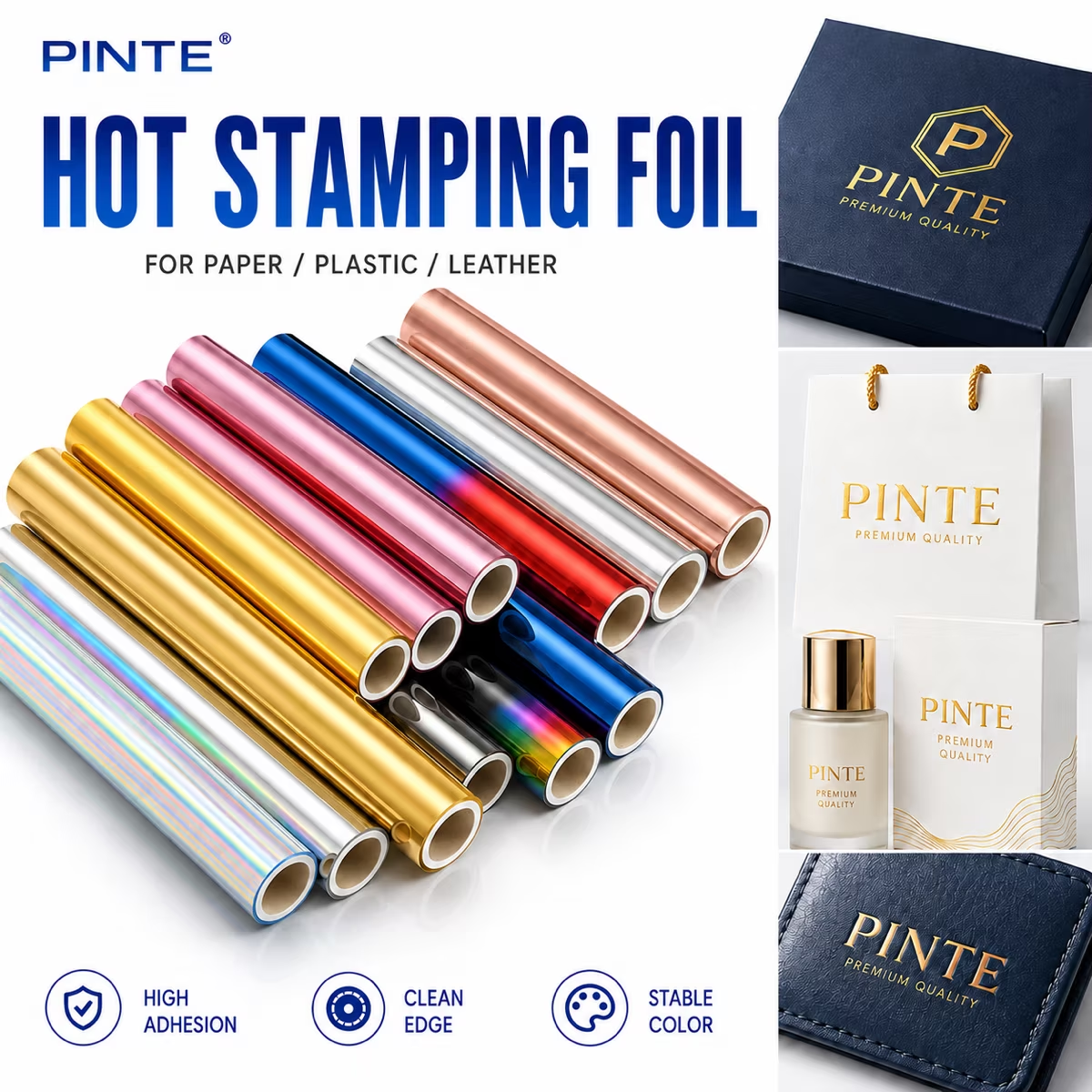
- Related PINTE direction: PK hot stamping foil for paper, carton, leather, and general packaging trials
If the artwork includes Fine lines and small type, keep those details in the trial area instead of judging only from a large solid block.
If the same package includes large solid areas, fine lines, small type, embossing, or post-lamination handling, include those areas in the same trial. A small test on blank stock may not represent adhesion, edge definition, rub resistance, or optical consistency on the finished package.
Substrate-specific notes
Natural leather varies by hide, oil content, dyeing, emboss texture, finish, and moisture. Natural grain can make the same logo look different across the panel, and fine lines or small type can disappear into texture. Leather trials should include smooth areas, grained areas, and bend-edge areas.
Natural leather acceptance should not stop at complete transfer. Check heat indentation, color change, cracking after flexing, and whether wax, oil, or care chemicals affect long-term adhesion.
Surface and process notes
As-supplied or uncoated surfaces look simple, but moisture, dusting, fiber roughness, and print preparation can change metallic coverage and edge cleanliness.
Flatbed hot stamping is driven by pressure uniformity, die temperature, dwell time, and makeready. It suits paper and cartons, but fine lines, solid areas, and laminated surfaces need separate confirmation.
Fine lines and small type should be tested with the real minimum type, reverse lines, and logo corners; edge cleanliness matters more than first-glance brightness.
Foil selection and sampling workflow
- Confirm that the substrate sample matches production, including coating, lamination, varnish, ink, and surface contamination risk.
- Confirm the Flatbed or platen hot stamping route and record temperature, pressure, dwell time, speed, web tension, or UV curing conditions as applicable.
- Test the difficult area from the real artwork and watch for Fine lines and small type, edge cleanliness, registration, gloss, and coverage stability.
- Change only one variable per trial and mark the sample with foil family, roll reference, machine route, and settings.
- Keep separate visual, durability-tested, and retained production samples so repeat orders can be judged against evidence instead of memory.
Acceptance checks
- Production-representative substrate, machine, artwork, and speed trial
- Controlled process-window sampling
- Visual transfer-completeness inspection
- Magnified edge and fine-detail inspection
- Supplier grade selection notes and recorded pass/fail criteria
Define the pass condition before testing. For example, decide whether slight edge residue is allowed after tape pull, how many rub cycles are required, and whether alcohol wiping reflects the final use case. A test without pass criteria is weak for supplier comparison and weak for batch follow-up.
Common mistakes
- Choosing by color name while ignoring how As-supplied or uncoated surface and Flatbed or platen hot stamping affect adhesive and release behavior.
- Replacing the finished package with a lab coupon, then discovering Fine lines and small type during production.
- Changing several variables at once, which hides whether the problem came from temperature, pressure, speed, substrate, or foil grade.
- Failing to keep approved samples and roll labels, making repeat-order color and gloss comparison subjective.
How to use the sources
- Foil & Specialty Effects Association: FSEA and PaperSpecs Release Print Decorating Reference for Designers: Foil Cheat Sheet, used for process limits, test-method context, or foil grade-selection principles.
- INX International Ink Co.: Mastering the Art of Foil Printing: A Complete Guide to Hot and Cold Techniques, used for process limits, test-method context, or foil grade-selection principles.
- Foilco Limited: Foilco D4 Foil Grade Guide - Edition 1, used for process limits, test-method context, or foil grade-selection principles.
These references are useful for process principles and test boundaries, but they do not replace production sampling. Final purchasing decisions should be based on the actual substrate, machine, artwork, speed, and customer acceptance requirements.
Frequently Asked Questions
- Can Natural leather foil be ordered by color name only?
- No. Color is only the visual target; foil choice also depends on As-supplied or uncoated surface, Flatbed or platen hot stamping, artwork detail, press speed, and durability testing.
- What condition is most often missed during sampling?
- Real surface condition and production speed are often missed. Final settings must be confirmed on the actual substrate, machine, artwork/design, and speed.
- How can the RFQ get a more useful supplier answer?
- State substrate, surface treatment, process route, target finish, artwork challenge, test requirement, roll specification, and quantity; ask the supplier to return a foil family and test recommendation.
References
-
Foil & Specialty Effects Association: FSEA and PaperSpecs Release Print Decorating Reference for Designers: Foil Cheat Sheet
Foil & Specialty Effects Association
Association overview confirming distinct hot foil, cold foil, toner digital foil, varnish digital foil, and foil-substrate categories for designer process comparison.
-
INX International Ink Co.: Mastering the Art of Foil Printing: A Complete Guide to Hot and Cold Techniques
INX International Ink Co.
Technical overview by an ink and coating manufacturer covering foil construction, hot versus cold transfer, adhesive curing, design preparation, and process tradeoffs. Use for process explanation, not machine- or foil-grade guarantees.
-
Foilco Limited: Foilco D4 Foil Grade Guide - Edition 1
Foilco Limited
Official grade-selection guide covering finish families, typical applications, and grade-dependent substrate/artwork fit. The guide itself says its information is general and recommends testing and technical support.
-
LEONHARD KURZ: Decoration Processes
LEONHARD KURZ
Official overview of hot stamping and related decoration processes for plastic surfaces, including partial and full-surface decoration and complex geometries. It does not identify PINTE grades or validate every resin.